A valve that controls the compressed air flow, pressure, and direction in a network/s. This is achieved by varying the size of the flow passage.
The orifice opening or closing can be adjusted
- manually by using hand wheel or handle
- automatically by using an actuator.
The actuator is selected based on the type of movement of such valves, which could be either
- linear profile and
- rotary profile
The actuator is
- Diaphragm acting against spring tension
- Pinion & cylinder acting against spring tension
- Pneumatic cylinder
- Electric motor
The controlling element inside the valve could be:
- a stem or plug (linear movement) and
- disc or ball (rotary movement).
The modulating (for gradually opening or closing an orifice) signal could be pneumatic, electric or hydraulic. The controlling signal could be based on failure to safety modes:
- “Air or control signal failure to close” – On failure of compressed air to the actuator, the valve closes under spring pressure or by backup power.
- “Air or control signal failure to open” – On failure of compressed air to actuator, the valve opens under spring pressure or by backup power.
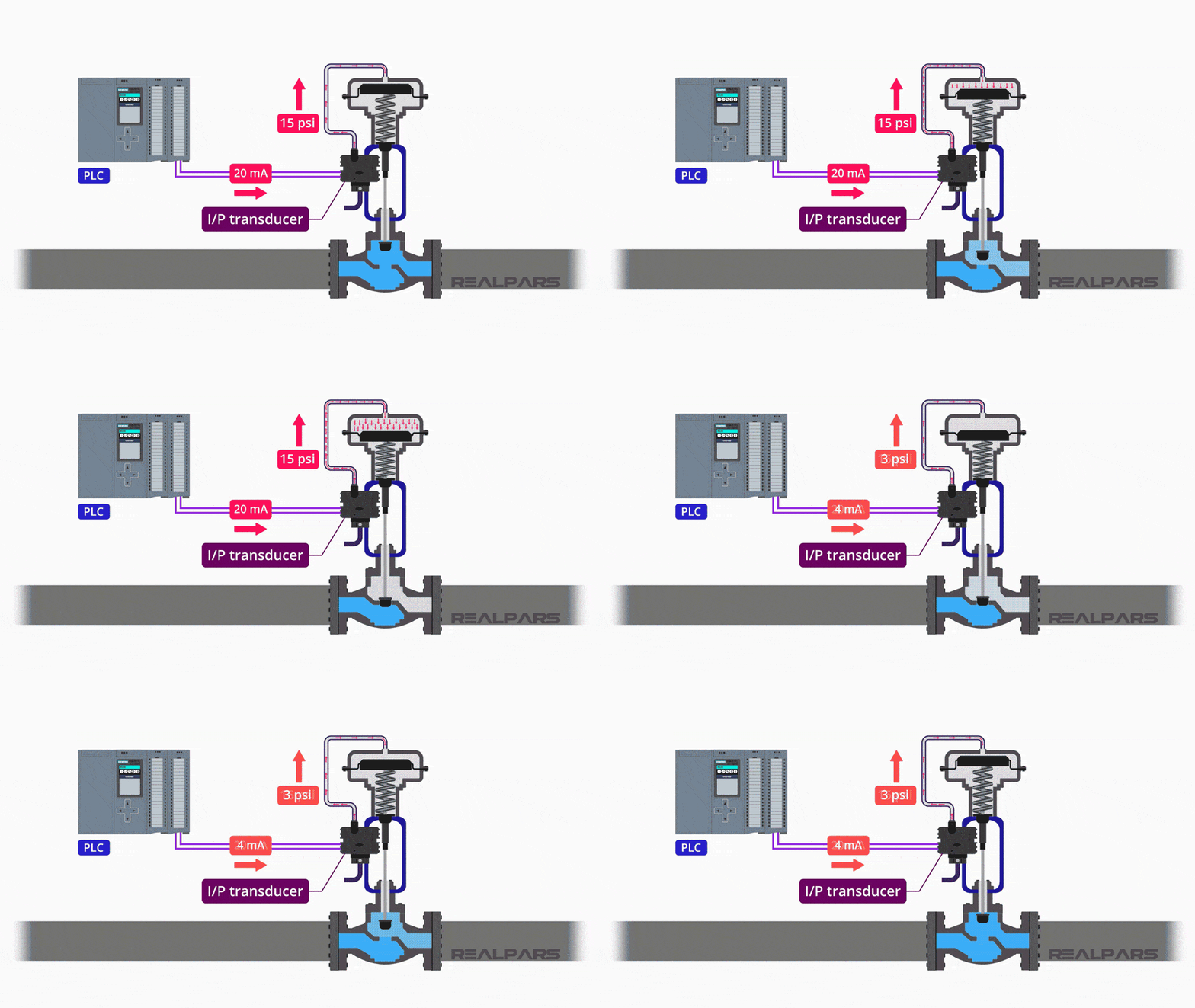
In case of electro-pneumatic positioners, the control signal is produced by a PID controller
The control signal is converted by using various types of Positioners:
- Pneumatic
- Electro-pneumatic I to P Analogue
- Electro-pneumatic I to P Digital
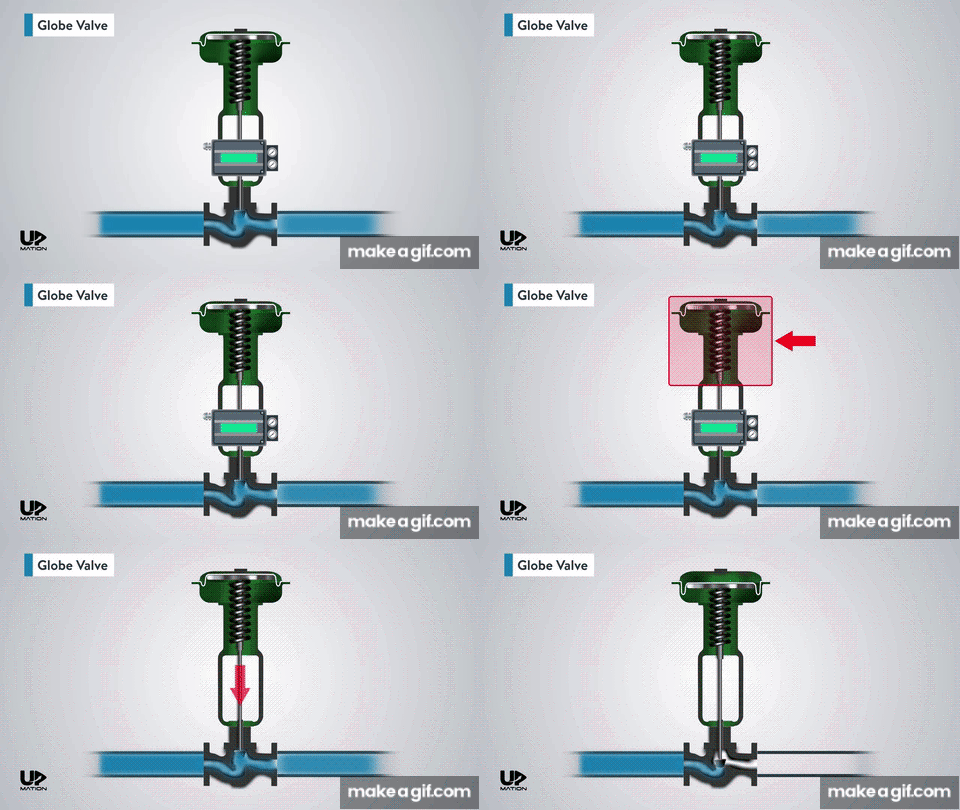
Linear actuation movement:
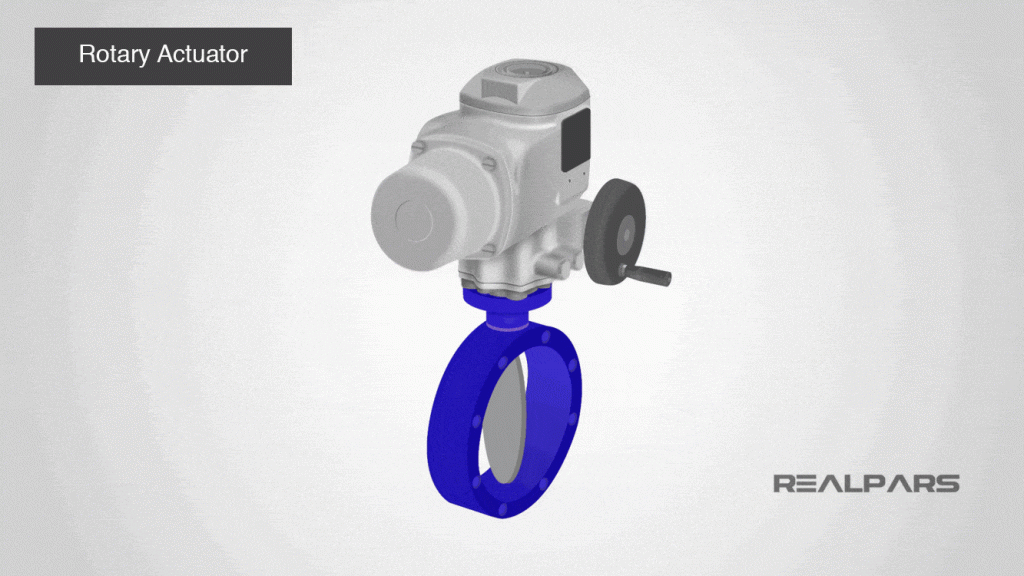
Rotary actuation movement: